
ABSTRACT
America’s roadways are becoming more dangerous for pedestrians. In 2026, South Carolina ranked fourth among the nation’s most dangerous states for pedestrians.
Overall roadway deaths have dropped, but that doesn't tell the whole story.
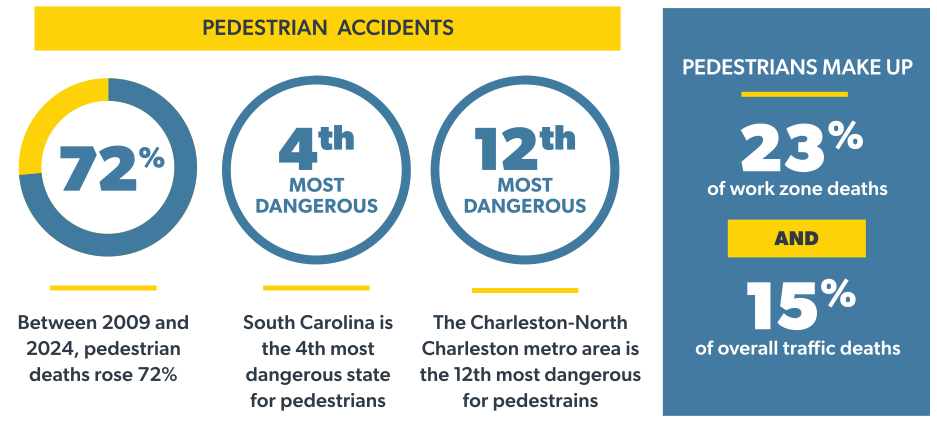
In April 2026, National Highway Traffic Safety Administration (NHTSA) administrator Jonathan Morrison announced that “American roads are safer.” Indeed, overall roadway deaths dropped six percent nationwide between 2022 and 2024. Yet the administrator’s claim overlooks the broader picture. Between 2009 and 2024, pedestrian deaths rose a staggering 72 percent, faster than both population and vehicle miles traveled.
Representing Injured People Since 1927
QUICK LINKS
Key Findings: Pedestrian Accident Trends in South Carolina
Major Metro Areas Continue to Pose Huge Risks for Pedestrians
Features that Make Roads Dangerous for Pedestrians
Why Are Pedestrian Collisions Deadly?
Improving SC Road Safety for Pedestrians
Frequently Asked Questions About South Carolina Pedestrian Accidents
Key Findings: Pedestrian Accident Trends in South Carolina
South Carolina ranks 4th among the most dangerous states for pedestrians nationwide, with 893 pedestrian deaths recorded between 2020 and 2024.
Additionally, the Charleston-North Charleston metro area is the most dangerous in the state for pedestrians, ranking 12th nationally, with Columbia and the Myrtle Beach-Florence area also seeing elevated pedestrian accident rates. Online search interest for pedestrian accident lawyers and attorneys in South Carolina has risen sharply, with the highest search volume concentrated in Charleston, Columbia, and Myrtle Beach.
Speeding, oversized vehicles, too-wide traffic lanes, and a lack of sidewalks or crosswalks are the leading contributing factors in South Carolina pedestrian collisions. Adults aged 50 and older face a significantly higher risk of death or serious injury in a pedestrian collision than younger age groups.
**Disclaimer: Steinberg Law Firm is not involved in any of the cases mentioned in this report. This report is presented for informational purposes only and is not legal advice. Reading this does not establish an attorney-client relationship.
Pedestrians Face Higher Risks Nationwide
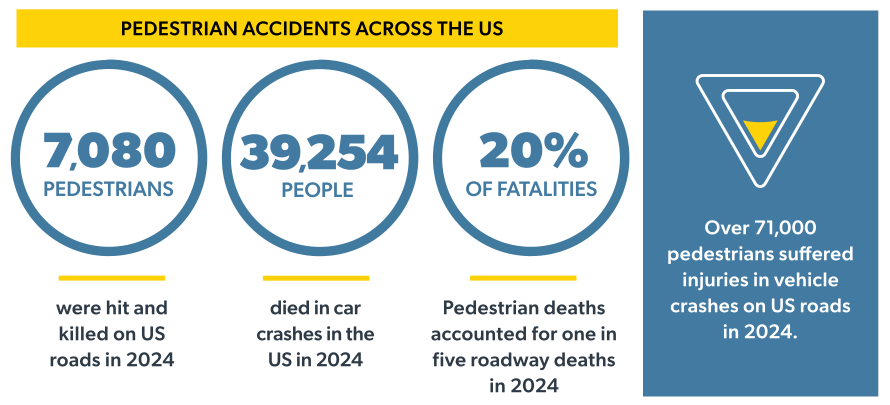
Pedestrian deaths accounted for one in five roadway deaths in 2024. That’s twenty percent, or the highest percentage on record. Pedestrians account for less than two percent of roadway traffic. If pedestrians suffered fatal incidents in proportion to their numbers, they would account for less than two percent of deaths, not twenty.
- In 2024, 7,080 pedestrians were hit and killed on US roads. This number represents the third-highest annual total of pedestrian deaths since 1982.
- Only 2022 and 2023 registered higher numbers.
- In total, 39,254 people died in car crashes on US roads in 2024.
- Over 71,000 pedestrians suffered injuries in vehicle crashes on US roads in 2024.
In comparison, 6,200 pedestrians died in collisions on US roads in 2019. At the time, 6,200 deaths were a “historic high,” as many headlines from the era made clear.
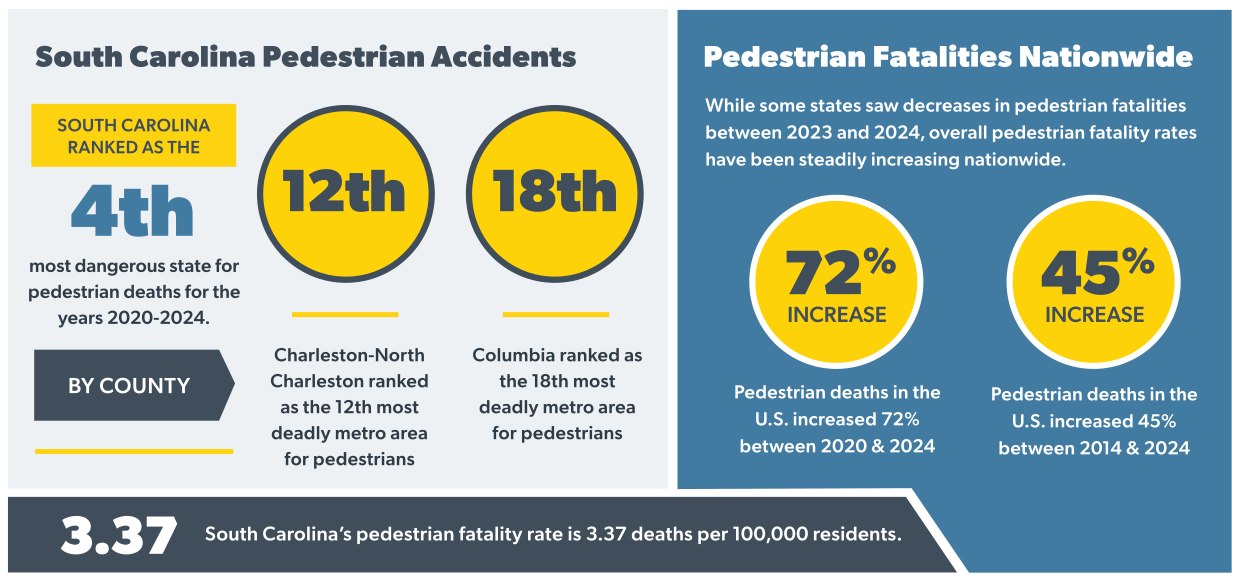
How does the United States compare to other nations? When it comes to pedestrian safety, US states and cities lag far behind our neighbors in the developed world. Between 2014 and 2024, Japan reduced its pedestrian death rates by 30 percent. Germany reduced its pedestrian fatalities by 20 percent, and the UK cut its pedestrian fatalities by 10 percent. In the same period, the United States allowed pedestrian death rates to jump 45 percent. By failing to focus on pedestrian safety, the United States effectively wipes out the gains other countries make and keeps the global pedestrian death toll unacceptably high.
Information in this report comes from Smart Growth America’s Dangerous by Design 2026, Dangerous by Design 2024, and Divided by Design studies, the Center for Pedestrian and Bicyclist Safety, the National Highway Traffic Safety Administration, the South Carolina Department of Public Safety, South Carolina Code Title 56, the Washington Post, and the United States Department of Transportation.
How Does South Carolina Rank?
South Carolina Ranks Fourth Among Most Dangerous States for Pedestrians
Smart Growth America’s “Dangerous by Design 2026” report ranks US states and large metro areas by their rates of pedestrian deaths. The organization notes that “every one [of the ranked states and metro areas] is too dangerous for people walking.”
- In the 2026 report, South Carolina ranks fourth, with 893 pedestrian deaths between 2020 and 2024.
- This is 143 deaths higher than the state’s 2015 to 2019 number of 750 deaths.
- South Carolina’s average annual pedestrian death rate is 3.37 deaths per 100,000 people, placing the state fourth behind Arizona (3.49), Louisiana (3.53), and New Mexico (4.42).
- Nine of the states in the top ten have pedestrian death rates that are trending upward. Only Delaware (#10) currently sees a slight downward trend.
*Rankings are based on data from 2020 to 2024 and compared to rates from 2015 to 2019.

Charleston and North Charleston Rank 12th Among Deadliest Metro Areas for Pedestrians
The Charleston-North Charleston metro area ranked 12th among US metro areas in terms of risk to pedestrians.
- In Charleston-North Charleston, the average annual pedestrian fatality rate was 3.69 deaths per 100,000 people, higher than the overall state average.
- The metro area saw 154 pedestrian deaths between 2020 and 2024, higher than the 125 deaths recorded between 2015 and 2019.
Like other major metropolitan areas near the top of the list, Charleston-North Charleston is facing an increasing trend in pedestrian death rates. Memphis, Tennessee, ranked first among the 101 metro areas studied, with 5.5 deaths per 100,000 people. Columbia, South Carolina, ranked 18th.
Pedestrian Accident Statistics
QUICK LINKS
Key Findings: Pedestrian Accident Trends in South Carolina
Major Metro Areas Continue to Pose Huge Risks for Pedestrians
Features that Make Roads Dangerous for Pedestrians
Why Are Pedestrian Collisions Deadly?
Improving SC Road Safety for Pedestrians
Frequently Asked Questions About South Carolina Pedestrian Accidents
Major Metro Areas Continue to Pose Huge Risks for Pedestrians
As Smart Growth America notes, improved rankings don’t necessarily mean that streets got safer.
- For example, Charleston-North Charleston ranked ninth in the Dangerous by Design 2024 report, compared to 12th in 2026.
- However, the metro area actually recorded more deaths. The Charleston-North Charleston metro area dropped in the rankings because other metro areas, including Riverside, California, performed worse, not because Charleston improved. Charleston’s roads still remain highly dangerous for pedestrians.
In 2007 and 2008, the average pedestrian fatality rate in the top 20 deadliest metro areas was 1.96 deaths per 100,000 people. Today, that rate is 3.93 deaths per 100,000 people. In the 2009 Dangerous by Design report, none of the 101 top metro areas had a death rate higher than 3.52.
Today, the top 14 are at higher rates, including Charleston-North Charleston. Every metro area in the top 14 is more deadly for pedestrians now than the top-ranked metro area in 2009. Only 18 of the top 101 metro areas have seen pedestrian death rates decrease.
Columbia and the Myrtle Beach-Florence Area Also Face Elevated Pedestrian Risk
Charleston is not the only South Carolina metro area where pedestrians face serious danger. Columbia ranked 18th nationally among the 101 metro areas in the 2026 Dangerous by Design report, with a pedestrian fatality rate well above the national average.
The Florence-Myrtle Beach area has also emerged as a growing concern: search interest for pedestrian accident lawyers in Myrtle Beach has climbed sharply over the past year, reflecting both rising visitor traffic along the Grand Strand and the area’s ongoing pedestrian safety challenges. Anyone hurt while walking in Columbia, Myrtle Beach, Florence, or elsewhere in South Carolina faces many of the same risks documented throughout this report.
Features that Make Roads Dangerous for Pedestrians
Urban roads continue to pose significant dangers for pedestrians.
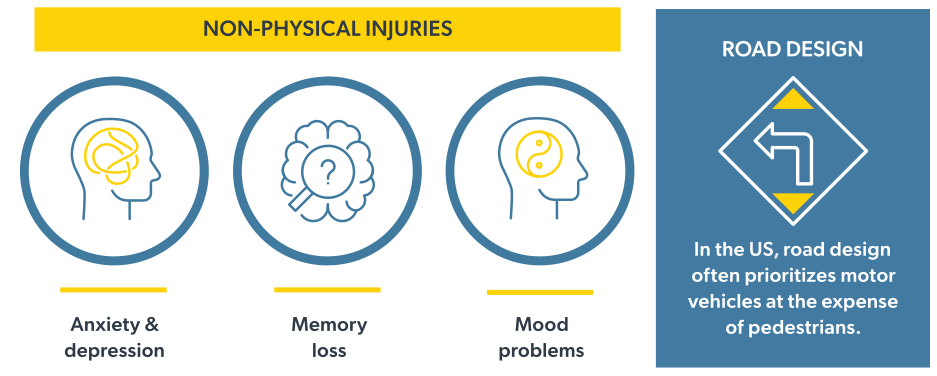
Public roads are just that: public. They are intended to allow everyone in a community to travel, regardless of the mode of transportation they use. Yet, road design often prioritizes motor vehicles at the expense of bicyclists, pedestrians, and everyone else who might need a public street.
Urban roads continue to pose significant dangers for pedestrians. Between 2015 and 2024, pedestrian deaths in urban areas jumped six percent. Urban roads combine many of the most dangerous features for pedestrians: high speeds, wide traffic lanes, a lack of pedestrian infrastructure, and poor visibility.

Dangerous driving speeds
“Speeding increases both the frequency and severity of crashes, yet it is both persistent and largely accepted as the norm amongst the traveling public,” notes the U.S. Department of Transportation. The faster a vehicle is traveling when it strikes a pedestrian, the more momentum it has.
Greater momentum means a car hits a person with greater force, increasing the risk of severe or fatal injuries. The US Department of Transportation notes that a pedestrian’s risk of death increases sharply as the speed at impact increases:
- At 23 miles per hour (mph), the risk of death is 10 percent.
- At 32 mph, the risk of death is 25 percent.
- At 42 mph, the risk of death is 50 percent.
- At 50 mph, the risk of death is 75 percent.
- At 58 mph, the risk of death is 90 percent.
Many motorists will travel 58 miles per hour or even faster on a roadway with a posted speed limit of 50 mph, not thinking their behavior is dangerous. Yet they increase the risk of death in a pedestrian collision from 75 percent to 90 percent.
Between 2015 and 2024, 10,473 people died in speeding-related crashes on South Carolina roads – including motorists, pedestrians, and bicyclists. This number represents 37.8 percent of all South Carolina crash deaths in that time period. Nationally, 28.8 percent of road deaths from 2015 to 2024 were speed-related. Speeding-related deaths were most common on roads other than freeways. These are the roads most likely to be used by pedestrians.
Too-wide lanes
Wide vehicle lanes make streets more dangerous for pedestrians in two ways.
- First, wide vehicle lanes create more distance that pedestrians must cross at intersections and crosswalks. The longer it takes a pedestrian to cross a traffic lane, the longer they are exposed to traffic and the greater the risk of a collision.
- Second, wide vehicle lanes encourage cars to drive faster. Drivers feel free to accelerate without fear of sideswiping a vehicle in a neighboring lane.
Faster speeds increase the time a driver needs to stop once the driver spots a pedestrian. They also increase the necessary stopping distance. In a busy area, a driver might not stop in time, causing serious injuries or death.
Wide traffic lanes also increase the risk of “pedestrian entrapment.” When a pedestrian crosses a wide road, he or she might not get across before the light changes. A vehicle that doesn’t yield to that pedestrian, allowing him or her to finish crossing, can then easily cause a crash.

Lack of pedestrian infrastructure
Sidewalks separate pedestrians from the flow of traffic, improving safety. When sidewalks aren’t present, South Carolina law allows pedestrians to walk on the left shoulder of a road, facing into traffic. This arrangement helps pedestrians see oncoming cars. Yet it also exposes pedestrians to a greater risk of serious injuries.
Sidewalks, crosswalks, and crossing signals help both drivers and pedestrians. This infrastructure keeps pedestrians further away from traffic. Crosswalks give pedestrians a marked place to cross, while crossing signals help them time their movement with traffic. Crosswalks also tell drivers exactly where to stop, look for pedestrians, and yield to them.
Intersections are common sites of pedestrian-car crashes. Vehicles turning or merging at intersections can cross a pedestrian’s path. Failure to yield to the pedestrian at the intersection can cause a deadly crash.
Poor visibility
Pedestrians are harder to see than vehicles. When visibility is poor, a driver’s chances of spotting a pedestrian drop further. Buildings, parking lanes, multiple lanes of traffic, blind curves and corners, and similar issues can restrict visibility, making areas dangerous for pedestrians. Vehicles backing out of driveways or parking spots may also collide with pedestrians due to limited visibility behind the vehicle.
A common pedestrian crash caused by poor visibility is the “multiple threat.” A car stops for a pedestrian in a crosswalk, as required by South Carolina law. Yet that car blocks the view of a second vehicle approaching the crosswalk. The second driver can’t see the pedestrian because of the first car, so they don’t realize they need to stop. Even though one driver recognized the danger and followed the law, the second one did not.
QUICK LINKS
Key Findings: Pedestrian Accident Trends in South Carolina
Major Metro Areas Continue to Pose Huge Risks for Pedestrians
Features that Make Roads Dangerous for Pedestrians
Why Are Pedestrian Collisions Deadly?
Improving SC Road Safety for Pedestrians
Frequently Asked Questions About South Carolina Pedestrian Accidents
Why Are Pedestrian Collisions Deadly?
The United States cut its pedestrian death rates almost in half between 1979 and 2009, only to see them rise again. What happened?
In addition to changing priorities in roadway design, changes in vehicle design made a pedestrian collision more likely to cause death. The changing makeup of people who walk instead of driving may also lead to more deaths.
Vehicle Size and Momentum
In 2022, 36 percent of all car crash deaths happened to people who were outside a vehicle. This group includes pedestrians, bicyclists, motorcyclists, and others who weren’t in a vehicle at the time of the crash. It’s more than one in three, and it represents the highest share of traffic deaths in 40 years. In 1994, only 21 percent of deaths occurred to those outside vehicles.
Improved vehicle safety may be coming at a cost to pedestrians. Many motorists feel safer in larger vehicles, and manufacturers have responded to consumer demand by producing larger vehicles since 2009. However, pedestrian deaths in the US rose 83 percent between 2009 and 2022 alongside the increase in vehicle size.
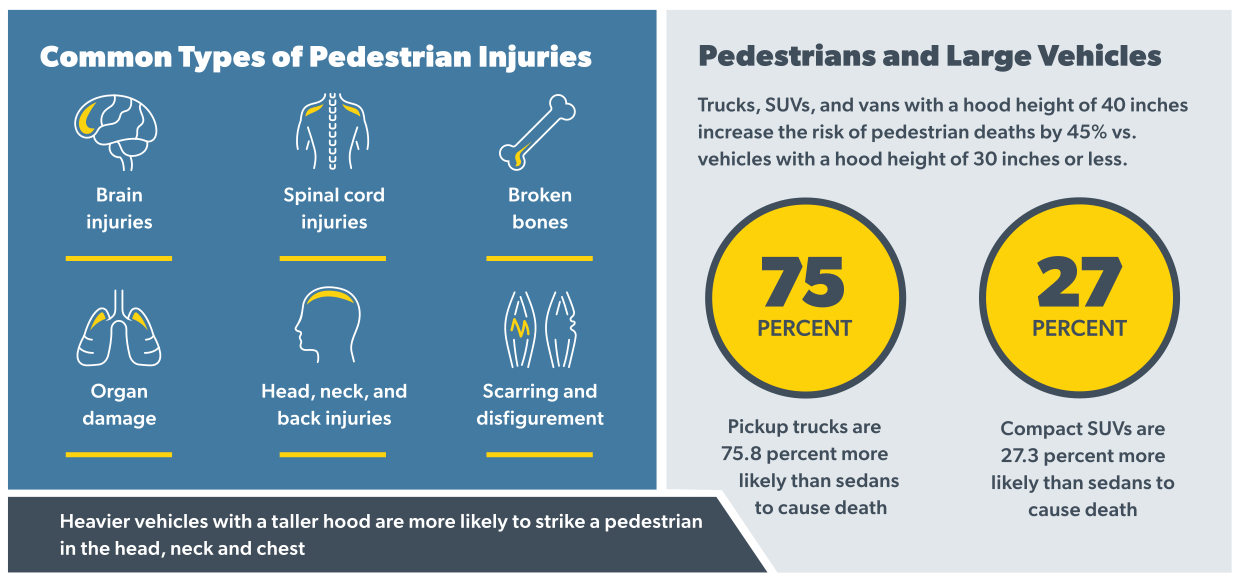
A study by the Center for Pedestrian and Bicyclist Safety examined police crash data from 2009 to 2019. Researchers compared vehicle speed, size, weight, and design with the injury and fatality outcomes in pedestrian crashes. They found that taller and heavier vehicles were more likely to cause more severe injuries to pedestrians. Taller, heavier vehicles were also more likely to cause pedestrian deaths.
- The study concluded that pickup trucks are 75.8 percent more likely than sedans to cause death when they strike a pedestrian.
- Compact SUVs are 27.3 percent more likely than sedans to claim a life in a pedestrian collision.
- Taller vehicles are more likely to hit a pedestrian in the trunk of the body, doing fatal damage to vital organs.
- Vehicles with a lower front profile are more likely to collide with a pedestrian’s legs. These injuries may be severe, but they are less likely to be life-threatening.
When combined with speed, taller and heavier vehicles become especially dangerous. Heavy vehicles increase the risk of pedestrian deaths even at lower speeds. The Center for Pedestrian and Bicyclist Safety study recommended that states lower speed limits, redesign roads, and build infrastructure to keep pedestrians out of traffic when possible. They also recommended regulations for vehicle size and weight.
Age
In 2024, people over age 65 accounted for 23 percent of all pedestrian deaths, even though they only make up 18 percent of the US population. As the nation’s population continues to age, people lose the ability to drive cars safely. To get groceries and other necessities, many older Americans travel on foot. By doing so, they face significant risks of death and severe injury on roadways.
In 2022, adults between the ages of 50 and 64 were more likely than any other age group to be killed in a pedestrian crash. Injuries that younger people may survive are more likely to be fatal to older people.
QUICK LINKS
Key Findings: Pedestrian Accident Trends in South Carolina
Major Metro Areas Continue to Pose Huge Risks for Pedestrians
Features that Make Roads Dangerous for Pedestrians
Why Are Pedestrian Collisions Deadly?
Improving SC Road Safety for Pedestrians
Frequently Asked Questions About South Carolina Pedestrian Accidents
Making South Carolina Safer
State departments of transportation can do much to make streets safer for pedestrians.
Over half (57 percent) of all pedestrian deaths in 2024 occurred on state-owned roads. States and the federal government can take other steps as well. Smart Growth America notes how seat belt laws, higher drinking ages, and lower speed limits all improved roadway safety and saved lives.
Cities can also encourage walking, bicycling, and mass transit use by building sidewalks, bike lanes, and other infrastructure to separate these travelers from motor vehicle lanes. As the oil crisis of the 1970s demonstrated, Americans will turn to alternative forms of transportation when they feel safe doing so.
Until states or the federal government act, however, it’s up to local roadway users to reduce the risks for those who share the roads. The South Carolina Department of Public Safety reminds both drivers and pedestrians that they must follow road rules when using the public streets.
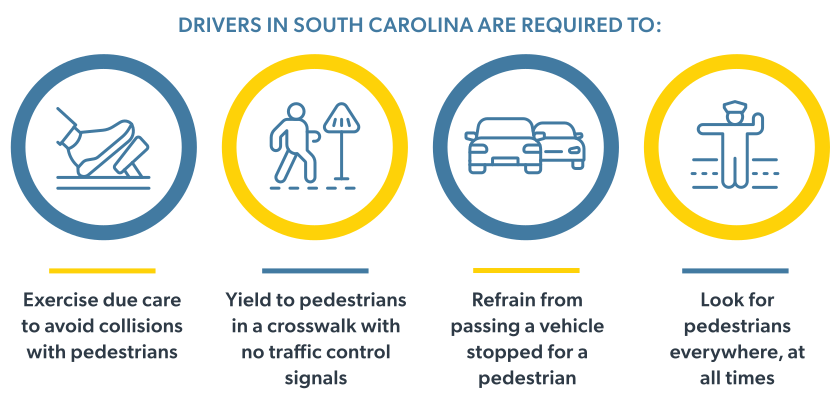
Drivers in South Carolina are required to:
- Exercise due care to avoid collisions with pedestrians or bicyclists.
- Yield to pedestrians crossing in a crosswalk when traffic control signals are not in place or in operation.
- Refrain from passing or overtaking a vehicle stopped to allow a pedestrian to cross the road at a marked crosswalk.
- The South Carolina Department of Public Safety recommends that drivers look for pedestrians everywhere, at all times.
It’s not always possible to guess in advance where a pedestrian might be. Use extra caution and drive slowly at night, in bad weather, or near crosswalks. Never drive under the influence of alcohol or drugs. Avoid distraction behind the wheel.
Pedestrians in South Carolina are required to:
- Follow traffic lights and signs, including crossing signs.
- Follow any local regulations for pedestrians.
- Yield to traffic when crossing anyplace there is no crosswalk.
- Stay on the sidewalk if there is one. If there is no sidewalk, stay on the shoulder of the road, walking toward traffic (on the left side of the roadway).
- Yield to emergency vehicles.
- Avoid freeways and avoid standing in the roadway.
- Stay off roads if you are dangerously intoxicated.
- Stay off bridges or railways with lights, signs, or crossing arms to warn traffic.
SCDPS recommends that pedestrians wear reflective clothing, especially at dawn and dusk, to increase their visibility. Pedestrians who stay aware of their surroundings can more easily protect themselves. Just like drivers, pedestrians should stay off roads if they’re under the influence of alcohol or drugs.
QUICK LINKS
Key Findings: Pedestrian Accident Trends in South Carolina
Major Metro Areas Continue to Pose Huge Risks for Pedestrians
Features that Make Roads Dangerous for Pedestrians
Why Are Pedestrian Collisions Deadly?
Improving SC Road Safety for Pedestrians
Frequently Asked Questions About South Carolina Pedestrian Accidents
Who Is Liable in a South Carolina Pedestrian Accident?
Liability in a pedestrian incident depends on who failed to follow the rules of the road. A driver who fails to yield, speeds, or drives distracted may be liable, but a pedestrian who crosses outside a crosswalk or ignores a signal may also share fault. Because South Carolina applies a modified comparative negligence rule, the amount of compensation available can depend heavily on how fault is divided between the parties.
What Should You Do After a Pedestrian Accident in South Carolina?
Seek medical attention immediately, even if injuries seem minor, since some pedestrian injuries are not obvious right away. Call the police to file an official report, gather the driver's contact and insurance information, photograph the scene, and identify any witnesses. Never talk to the insurance carriers and give a statement. Speak with an attorney who has experience in representing pedestrian accident victims. Also, keep records of all medical treatments and note missed days from work. These pieces can help build a strong, effective personal injury case.
Do You Need a Pedestrian Accident Lawyer in South Carolina?
Pedestrian car accident claims often involve serious injuries, disputed fault, and negotiations with insurance companies, which is why many injured pedestrians in Charleston, Columbia, Myrtle Beach, and across South Carolina choose to speak with a pedestrian accident attorney before accepting a settlement offer.
Contact Steinberg Law Firm Today
Pedestrian death and injury rates on South Carolina roads remain near record-high levels. Drivers, pedestrians, and local and state governments all have roles to play in reducing these rates of death and serious injury. If you’ve been hurt or lost a loved one, speak to our Charleston personal injury attorneys today.