Traffic Bottlenecks Can Increase the Risk of a Crash
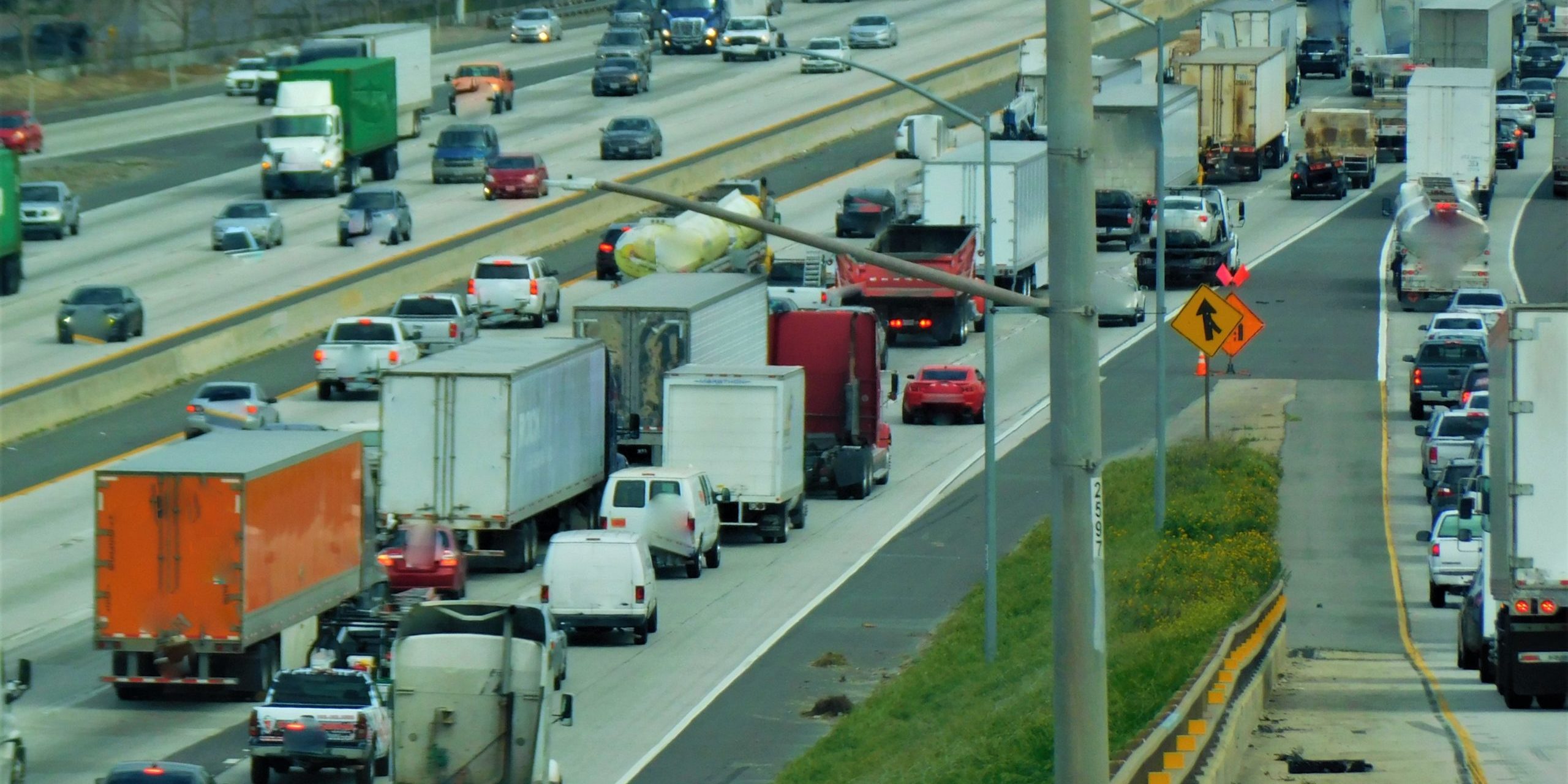
The American Transportation Research Institute (ATRI) collects information on large truck transportation, including the risk of truck “bottlenecks.” Bottlenecks occur when traffic congestion peaks, forcing all traffic in an area to slow down. These areas are often characterized by backed-up off ramps, traffic merging onto the roadway, or a decrease in the number of lanes. These areas are prone to accidents, especially with semi-trucks.
Here’s what South Carolina drivers need to know about traffic bottlenecks.
Traffic Bottleneck Issues Are On the Rise
While ATRI has collected data since 2002, the rise of GPS systems has provided a clearer look into the movement of large trucks on US roads. By analyzing this data, ATRI recently confirmed what many drivers already suspected: Traffic bottleneck issues are increasing.
The Federal Highway Administration (FHWA) identifies six major causes of traffic congestion:
- Limited lanes or roadway space,
- Poorly functioning traffic signals,
- Car accidents,
- Road construction zones,
- Visibility limitations and other challenges caused by bad weather conditions and
- Special events that create excess traffic.
Bottlenecks differ from overall traffic congestion by their localized nature. A “congested” roadway may have long lines of slowed traffic. A “bottleneck” creates a temporary slowdown in one place. In a bottleneck, stop-and-go traffic, sudden slowdowns and speed-ups, and rapidly changing conditions can make travel more challenging.
In 2024, 62 percent of the top 100 bottleneck areas reduced speed below 45 miles per hour, according to ATRI. On many freeways, 45 miles per hour is the minimum allowed traffic speed.
The places in which bottlenecks occur are increasing as well. In 2024, the top 100 bottlenecks were spread across 29 US states, more than half the nation.
Top Areas in South Carolina for Traffic Bottlenecks
ATRI’s 2024 list of the top 100 bottlenecks included two locations in South Carolina:
- Greenville: I-85 at I-385 ranked 79th on the ATRI Top 100 list.
- Charleston: I-26 at I-526 ranked 81st on the ATRI Top 100 list.
Neighboring Georgia and nearby Tennessee made the Top 5 states for bottlenecks in 2024. Texas ranked first nationwide, with 13 of the top 100 bottlenecks.
A study analyzing deadly traffic crashes in South Carolina revealed that the top two areas for bottlenecks are also common sites for fatal collisions. The study found that Greenville County ranked highest in the state for deadly crashes.
Accident and Injury Risks in Congested Traffic in South Carolina
When traffic slows down, it’s easy to assume that the risk of a crash or an injury decreases. Unfortunately, this is not always the case. In a bottleneck, a variety of factors actually increase the risk of serious accidents and injuries, including:
- Sudden stops. Bottlenecks can occur suddenly and with little warning. Drivers who are distracted by their phones, radios, and GPS may not realize that traffic ahead has come to a stop, running into the cars at the back of the bottleneck.
- Uncertainty. What’s causing the slowdown? Is there an accident ahead? Are you approaching construction? Did the weather suddenly turn bad? A state of uncertainty can disrupt drivers’ calm, rational thinking. Drivers around you may decide to take risks they wouldn’t otherwise take – increasing the risk of a crash.
- Lack of space. In congestion, traffic compresses together, creating less space between vehicles and fewer “exit routes” in case of a sudden emergency. For example, you may not be able to swerve right if a vehicle comes toward you from the left. In an emergency, vehicles in congested traffic may have nowhere to go except into another vehicle – causing additional damage and potentially serious injuries.
- Shorter stopping distances. “Stop-and-go” traffic often has short stopping distances between vehicles. You may pick up speed only to hit your brakes repeatedly. When drivers aren’t paying attention to the movement of traffic, a rear-end collision or a similar accident can easily occur.
- Unpredictability. The longer you drive, the better you become at anticipating other drivers’ moves. It’s not unusual for drivers in a bottleneck to get frustrated and seek any way out they can find. As a result, drivers may start to behave unpredictably. For example, drivers may cut off cars in other lanes as they merge, attempt to drive on the shoulder or median, or fail to signal their intentions before moving. When you don’t know what a driver is about to do, it’s harder to avoid a crash.
Traffic bottlenecks can also raise your level of distraction. You may be looking around at other traffic or trying to discover the source of the bottleneck. You may reach for your phone to warn friends, family, or co-workers that you’ll be late. These distractions can also increase the risk of a crash.
Truck Facts to Consider
While trucks take longer to climb a hill, they pick up speed going downhill much faster than the average car. A fully loaded semi driving on good road conditions at normal highway speed takes about 2 football fields to stop completely. You can easily imagine if visibility is diminished, or traffic stops suddenly in a bottleneck, how a truck driver may not have the time to avoid a collision. Add in driver fatigue, distracted driving, a poorly maintained truck, and any other number of factors and you can see how these cases quickly become complicated.
Top-rated Legal Advice
If you’ve been injured in a large truck accident, the experienced South Carolina injury attorneys at the Steinberg Law Firm can help. Contact us today to schedule a no-cost, no-obligation consultation. We offer virtual appointments and in-person meetings wherever it is convenient for you.
You May Also Like