
ABSTRACT
South Carolina consistently ranks in the top ten U.S. states for pedestrian deaths.
Several intersections with high pedestrian accident rates are located in Charleston, North Charleston, and surrounding areas.
The South Carolina Department of Public Safety tracks pedestrian accidents, injuries, deaths and associated costs. Here, we examine pedestrian accident trends, common injuries, and common accident locations in South Carolina.
Representing Injured People Since 1927
Overview of Pedestrian Accidents in South Carolina and Nationwide
South Carolina’s pedestrian death and injury rates have increased steadily since 2010.
Some years see slight decreases, but the overall trend has been upward. In 2023, South Carolina’s pedestrian death and injury rates were higher than the U.S. average. South Carolina ranked in the top ten deadliest states for pedestrians. Two metro areas, Charleston-North Charleston and Columbia, ranked in the top fifteen deadliest metro areas for pedestrians nationwide.
Fatal Pedestrian Accidents in South Carolina
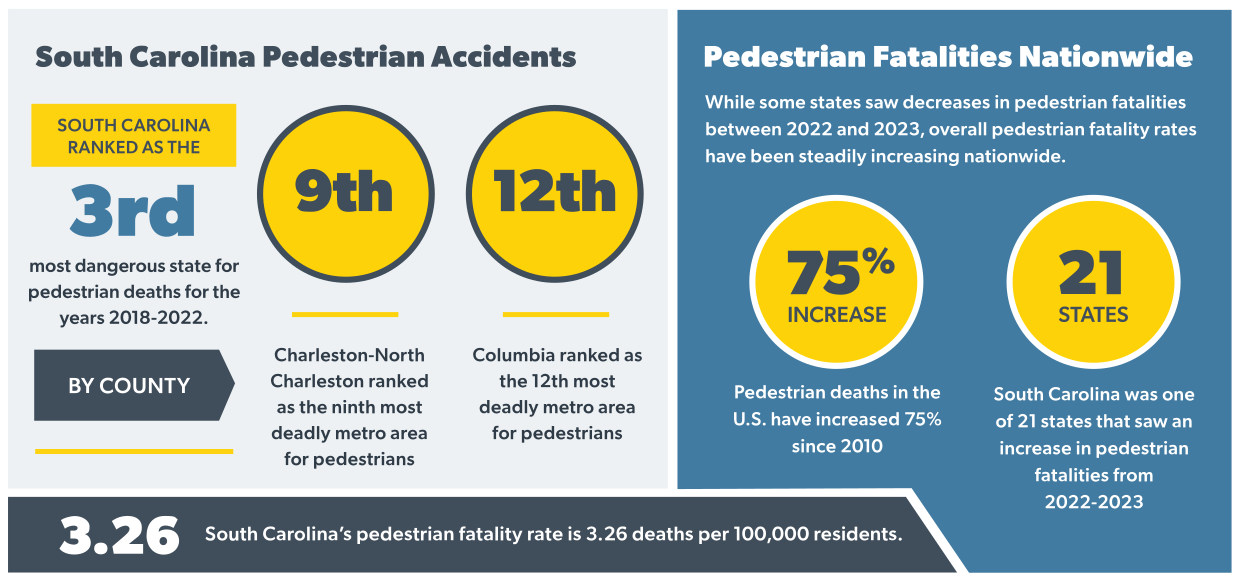
South Carolina had the fifth-highest pedestrian death rate in the United States in 2022, according to the National Highway Traffic Safety Administration (NHTSA). South Carolina’s pedestrian fatality rate was 3.26 deaths per 100,000 residents. New Mexico ranked first, with 4.4 deaths per 100,000 residents.
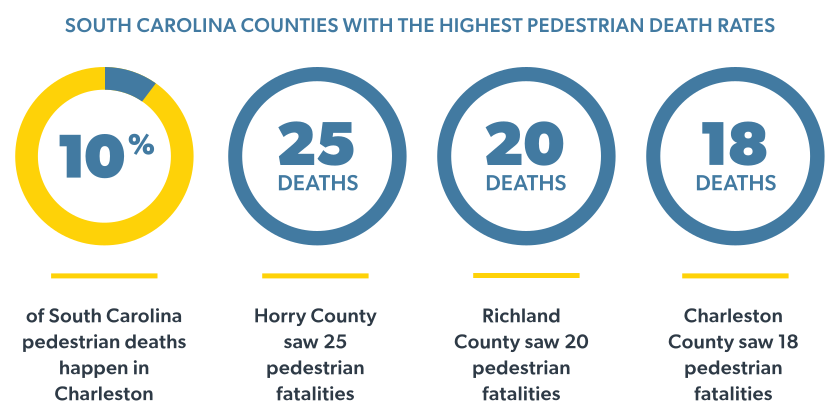
South Carolina recorded 172 pedestrian deaths in 2022. These fatal accidents were not evenly spread among the state’s 46 counties, however. South Carolina counties with the highest pedestrian death rates included:
- Charleston County: 18 pedestrian deaths
- Greenville County: 18 pedestrian deaths
- Horry County: 25 pedestrian deaths
- Richland County: 20 pedestrian deaths
Smart Growth America’s 2024 “Dangerous by Design” report also named Charleston and Columbia among the United State’s fifteen most deadly metro areas for pedestrians. The Charleston-North Charleston metro area ranked ninth; Columbia ranked 12th.
In the Charleston-North Charleston metro area, 147 pedestrians died in collisions between 2018 and 2022 - a rate of 3.66 deaths per 100,000 people, higher than the state average. Columbia’s rate was 3.46 deaths per 100,000 people, which was also higher than the state’s average for the same period. The Greenville-Anderson metropolitan area ranked 28th nationwide.
Rankings based on different data sets produce different results. Smart Growth America ranked South Carolina the third most dangerous state for pedestrians in 2024, based on average pedestrian deaths each year between 2018 and 2022. South Carolina averaged 3.41 pedestrian deaths per 100,000 people during these years - tied with Louisiana. Only Florida (3.43) and New Mexico (4.17) had higher rates of pedestrian deaths during the study years.
The Smart Growth America study also found that South Carolina is one of only six states with a higher pedestrian death rate than the highest rate in 2014. In 2014, the highest pedestrian death rate nationwide stood at 2.83 deaths per 100,000 people - lower than South Carolina’s 2018-2022 average of 3.41 deaths per 100,000 people and lower than the 2022 rate of 3.26 deaths per 100,000 people.
No matter how the numbers are calculated, one outcome is clear: South Carolina’s roads are dangerous for pedestrians.

Trends in South Carolina Pedestrian Accidents
2022’s fatal pedestrian accident numbers represent a slight decrease in pedestrian deaths compared to prior years. Yet this decrease has been short-lived.
According to the South Carolina Department of Transportation (SCDOT), in 2020, South Carolina had the second-highest pedestrian death rate in the U.S. In 2020, 187 pedestrians died on South Carolina roads - nearly 18 percent of all traffic deaths in the state that year.
According to the Governor's Highway Safety Association (GHSA), in 2023, South Carolina's pedestrian fatality rates increased yet again; nine more pedestrians died in 2023 compared to 2022. This increase makes South Carolina 1 of 21 states (Including the District of Columbia) to experience another increase while all other states decreased their pedestrian death rates from 2022 to 2023.
These numbers show that while South Carolina can reduce its pedestrian death and injury rates, those reductions will be short-lived without a broader commitment to pedestrian safety. This commitment will come from state officials, municipalities, and drivers dedicated to taking the due care necessary to prevent pedestrian collisions.
Pedestrian deaths increased by 4 percent nationwide between 2019 and 2020, according to SCDOT. Overall, pedestrian deaths have increased 75 percent since 2010 - a significant increase in a period that saw sharp decreases in car and truck accident deaths, according to Smart Growth America.
Fatal Pedestrian Accident Statistics
Dangerous Roads and Intersections for Pedestrians in South Carolina
While pedestrians may face several dangers on South Carolina roads, some areas pose higher risks.
Data from SCDOT highlights several dangerous areas. Many of these roadways and intersections are in Charleston County and Horry County.
Calhoun Street from Courtenay Drive to Meeting Street (S-404)
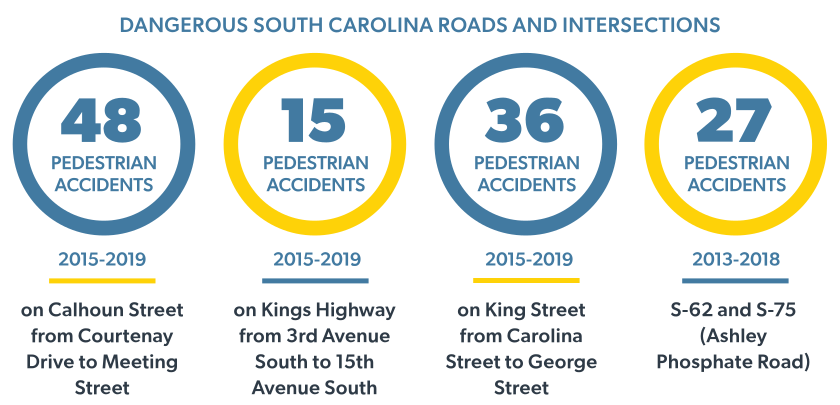
The stretch of S-404 (Calhoun Street) between Courtenay Drive to Meeting Street in Charleston County saw the highest rate of total pedestrian crashes between 2015 and 2019. During this period, 48 pedestrian crashes occurred, along with 22 bicycle crashes. At a density of 70.9 crashes per mile, this stretch has the highest rate of collisions between cars and those not in vehicles.
Between 2015 and 2019, these accidents caused 4 severe injuries and 59 mild or moderate injuries.
Kings Highway from 3rd Avenue South to 15th Avenue South (US-17)
US-17 (Kings Highway) between 3rd Ave South and 15th Ave South was Horry County’s most dangerous stretch of road between 2015 and 2019, according to SCDOT. During this period, 41 total crashes occurred, or 47.1 crashes per mile. These included 15 pedestrian accidents.
Collisions in this stretch caused 2 deaths, 5 serious injuries, and 28 mild or moderate injuries.
US-17 (Kings Highway) between 9th Ave North and 23rd Ave North is also a site of frequent pedestrian collisions. Ranked fifth in SCDOT data from 2015 to 2019, this stretch saw 21 pedestrian crashes in that period, which included two deaths, six serious injuries, and 21 mild and moderate injuries.
King Street from Carolina Street to George Street (S-104)
Ranked second in SCDOT’s “dangerous roadway” data from 2015 to 2019, S-104 (King Street) between Carolina and George Streets in Charleston County racked up 36 pedestrian crashes during the study period. The area also recorded 29 bicycle crashes during this time. In total, 65 vehicle accidents occurred in five years on this stretch of road.
These accidents caused 2 deaths and 6 severe injuries. They also caused 18 moderate injuries and up to 29 mild or other injury types.
S-62 and S-75 (Ashley Phosphate Road)
A 2020 road safety audit stated, "SCDOT identified S-62 and S-75 (Ashley Phosphate Road) as a high crash corridor for both vehicular and non-motorized users,” including pedestrians. Ashley Phosphate Road ranked in the top ten areas for SCDOT’s pedestrian and bicyclist safety projects. SCDOT commissioned a study of pedestrian safety in this area.
Between 2013 and 2018, Ashley Phosphate Road was the site of 27 pedestrian crashes that claimed 8 lives.
High on the list was the intersection of I-26 and Ashley Phosphate Road, which was ranked the second most dangerous in South Carolina and the deadliest in the Tri-County area. The intersection’s multiple lanes, sparse signs, worn road markings, and lack of medians or barriers make it risky for pedestrians to cross.
Common Injuries Suffered in South Carolina Pedestrian Accidents
The difference in size between a pedestrian and a vehicle makes collisions more dangerous for pedestrians than for vehicle drivers and passengers.
A pedestrian may weigh less than 10 percent as much as a vehicle. The vehicle also protects its drivers and passengers, while pedestrians have no protection in a crash.
Common injuries in South Carolina pedestrian accidents include:
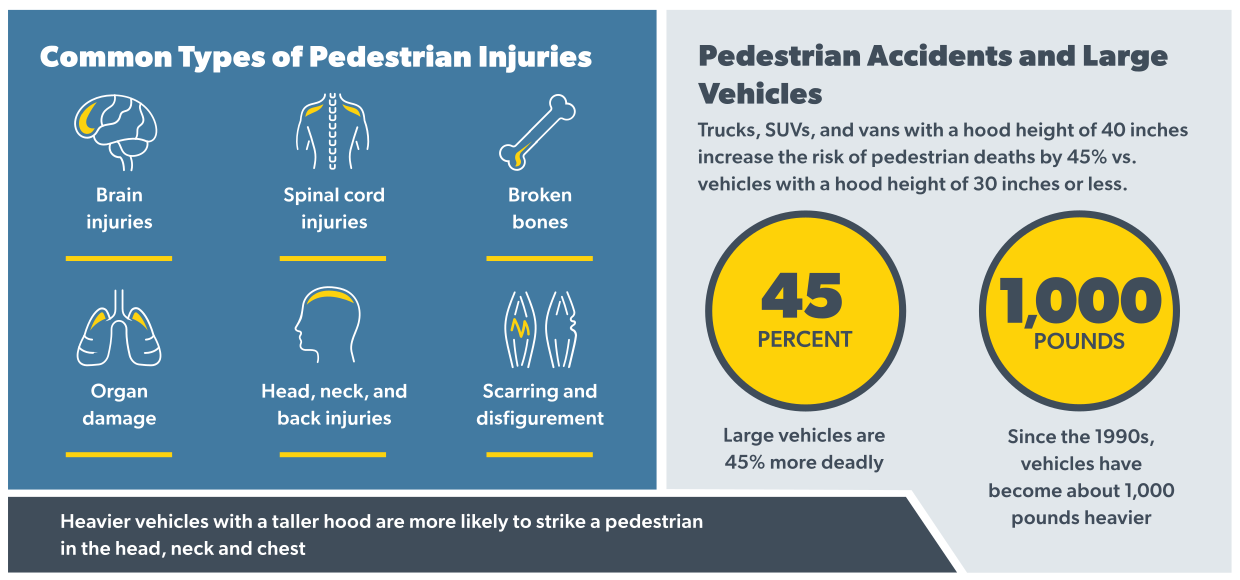
- Brain injuries, including concussions and other traumatic brain injuries,
- Spinal cord injuries, which can cause paralysis and other lifelong issues,
- Head, neck, and back injuries like whiplash, herniated discs, and broken bones,
- Broken or fractured bones throughout the body,
- Crush injuries damaging muscles, skin, and nerves,
- Organ damage and internal bleeding, and
- Scarring and disfigurement.
For those who survive a pedestrian accident, psychological injuries like post-traumatic stress symptoms, anxiety, depression, memory loss, and mood problems can linger long after physical injuries have healed. These injuries also require expert medical treatment.

Pedestrian crash rates are increasing and pedestrian collisions are causing more deaths and serious injuries as well. One reason is that heavier vehicles with taller, more vertical front ends are becoming commonplace on roads in South Carolina and throughout the United States.
According to the Insurance Institute for Highway Safety (IIHS), pickups, SUVs, and vans with a hood height of 40 inches or more increase the risk of causing death in a pedestrian crash by 45 percent versus vehicles with a hood height of 30 inches or less.
A taller hood means the vehicle is more likely to strike a pedestrian in the neck, chest, and abdomen, causing fatal damage to vital organs like the brain, heart, lungs, or liver. Shorter vehicles are more likely to strike a pedestrian in the legs. While leg injuries can be severe and life-altering, they are less likely to be deadly than injuries to the brain or vital organs.
Vehicles with hood heights between 30 and 40 inches increase the risk to pedestrians if the front end is blunt rather than tapered. A blunt front end creates a greater surface area to connect with a pedestrian’s body, increasing the risk of serious injuries or deaths.
Since the 1990s, U.S. vehicles have gotten about 8 inches taller and 1,000 pounds heavier on average. This makes them more likely to cause life-threatening injuries in a collision with an unprotected pedestrian.
Road Design
Roadway design plays a significant role in how people drive.
Drivers typically travel only at speeds that feel comfortable to them. When roads are designed in a particular way where driving at high speeds begins to feel comfortable, it can enable drivers to drive faster than the speed limit, which may cause more damage if they strike a pedestrian.
Street design elements that increase the speed of traffic include:
- Multiple lanes or wide one-way streets,
- Wide, straight, flat lanes,
- Clear lines of sight across intersections, unobstructed by buildings or trees,
- Long traffic light cycle lengths,
- Lack of barriers, dividers, medians, or other roadway “furniture” for drivers to navigate,
- Lack of frequent crosswalks, signals, lights, and signs, and
- Lack of on-street parking.
Speed and Stopping Distance
As cars go faster, their stopping distance increases. For instance, a vehicle traveling only 15 miles per hour can stop for a pedestrian within 25 feet. Over 40 miles per hour, the same vehicle needs 118 feet or more to stop.
Traffic speed is directly related to pedestrian accidents, injuries, and death rates. According to the National Association of City Transportation Officials (NACTO):
- At 10-15 miles per hour, the risk of a pedestrian crash is 5 percent and the fatality risk is 2 percent.
- At 20-25 miles per hour, the risk of a pedestrian crash is 15 percent and the fatality risk is 5 percent.
- At 30-35 miles per hour, the risk of a pedestrian crash is 55 percent and the fatality risk is 45 percent.
- At 40 miles per hour and above, the risk of a pedestrian crash is 90 percent and the fatality risk is 85 percent.
Many of South Carolina’s most dangerous intersections demonstrate several design features that encourage higher speeds, placing pedestrians at a higher risk of death or serious injury.
Contact an Experienced South Carolina Pedestrian Accident Attorney at the Steinberg Law Firm Today
Pedestrian accidents can be devastating. Heavy vehicles moving at high rates of speed can cause death or life-altering, catastrophic injuries in a second. Drivers responsible for watching out for pedestrians may fail to meet this obligation, causing serious harm.
If you’ve been injured or lost a loved one in a pedestrian accident, talk to the team at the Steinberg Law Firm. Our experienced South Carolina pedestrian injury attorneys work with clients throughout the Charleston metro area, as well as in Summerville, Goose Creek, North Charleston, Moncks Corner, and throughout South Carolina. To learn more, use our online form or call us to schedule a free, confidential consultation.